"As a dedicated transmission shaft supplier, I’ve witnessed the pivotal role that heat treatment plays in the production process. In the automotive, industrial machinery, and aerospace sectors, a properly heat – treated transmission shaft can significantly enhance performance and durability. This blog will guide you through the process of heat – treating a transmission shaft, highlighting its importance and our expertise as a supplier. Transmission Shaft
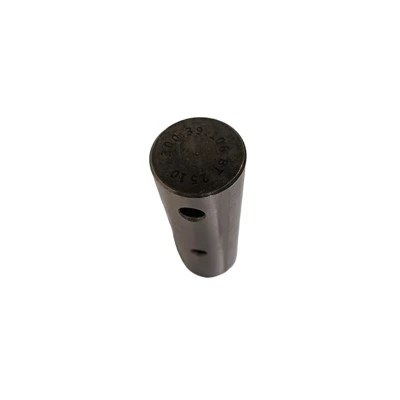
Importance of Heat Treatment for Transmission Shafts
Before delving into the actual heat – treating process, it’s essential to understand why it’s so crucial for transmission shafts. A transmission shaft is subject to high torque, varying loads, and constant friction during operation. Without proper heat treatment, it may experience premature wear, fatigue failure, or even breakage.
Heat treatment modifies the microstructure of the shaft’s metal. It can improve hardness, toughness, and resistance to wear and corrosion. For instance, a hardened outer layer can withstand the abrasive forces, while a tough core can absorb the high – energy impacts and torsional stresses.
Selecting the Right Material
The first step in heat – treating a transmission shaft is choosing the appropriate material. Commonly used materials include alloy steels like 4140, 4340, and 8620. These steels offer a good balance of strength, toughness, and hardenability.
4140 steel is well – known for its high strength and good ductility. It contains chromium and molybdenum, which enhance its hardenability and resistance to wear. 4340 steel, on the other hand, has even higher strength properties due to the addition of nickel, making it suitable for applications with extremely high loads. 8620 steel is a low – carbon alloy steel that is often case – hardened. It’s cost – effective and easy to machine, making it a popular choice for many transmission shaft applications.
Our company, as a professional transmission shaft supplier, can assist in selecting the most suitable material based on your specific application requirements. We have a wide range of materials in stock and can provide samples for testing.
Pre – treatment Preparation
Once the material is selected, proper pre – treatment is crucial. This typically includes machining the shaft to its near – final dimensions. Any surface defects, such as cracks or scratches, should be removed before heat treatment. A clean and smooth surface ensures uniform heat transfer and reduces the risk of uneven hardening.
In addition, stress – relief annealing can be performed before the main heat – treatment process. This is especially important if the shaft has undergone significant machining or cold – working operations. Stress – relief annealing helps to remove internal stresses within the material, which could otherwise lead to distortion or cracking during subsequent heat treatment.
Heat – Treatment Process
Heating Phase
The heat – treatment process begins with heating the transmission shaft to a specific temperature. The temperature depends on the material and the desired microstructure. For example, when using 4140 steel for through – hardening, the shaft is typically heated to around 840 – 870°C (1544 – 1598°F).
This heating process should be done slowly and uniformly to avoid thermal shock. Specialized furnaces, such as electric resistance furnaces or induction heating systems, are commonly used. Our company uses state – of – the – art furnaces that can precisely control the heating rate and temperature, ensuring consistent results.
Austenitizing
Once the shaft reaches the appropriate temperature, it is held there for a certain period to allow the formation of austenite, a solid solution of carbon in iron. The holding time depends on the size and shape of the shaft, as well as the material. A larger shaft may require a longer holding time to ensure complete austenitization.
Quenching
Quenching is a critical step in the heat – treatment process. It involves rapidly cooling the austenitized shaft to transform the austenite into a harder microstructure, such as martensite. The choice of quenching medium is crucial and depends on the material’s hardenability and the desired properties of the shaft.
Common quenching media include water, oil, and polymer solutions. Water provides the fastest cooling rate but can cause severe distortion and cracking, especially for large or complex – shaped shafts. Oil has a slower cooling rate than water and is often used for alloy steels to reduce the risk of cracking. Polymer solutions offer a controllable cooling rate between water and oil and are suitable for a wide range of applications.
At our company, we have the expertise to select the most appropriate quenching medium and process parameters to achieve the desired hardness and minimize distortion.
Tempering
After quenching, the shaft is very hard but also brittle. Tempering is carried out to reduce the brittleness and improve the toughness of the shaft. The shaft is reheated to a lower temperature, typically between 150 – 650°C (302 – 1202°F), depending on the desired properties.
During tempering, some of the martensite is transformed into a more stable microstructure, such as tempered martensite. This process relieves internal stresses and improves the ductility and toughness of the shaft while maintaining a reasonable level of hardness.
Post – treatment Operations
After heat treatment, several post – treatment operations are usually required. Machining may be necessary to achieve the final dimensions and surface finish. Grinding is a common operation to improve the surface smoothness and dimensional accuracy of the shaft.
Surface finishing processes, such as nitriding or coating, can also be applied to enhance the corrosion resistance and wear properties of the shaft. Nitriding is a thermochemical treatment that diffuses nitrogen into the surface of the shaft, forming a hard and wear – resistant nitride layer.
Quality Control
Quality control is an integral part of the heat – treatment process. We use a variety of non – destructive and destructive testing methods to ensure the quality of the heat – treated transmission shafts. Non – destructive testing methods include ultrasonic testing, magnetic particle testing, and eddy – current testing to detect surface and subsurface defects.
Destructive testing, such as hardness testing and metallographic analysis, is used to evaluate the mechanical properties and microstructure of the shaft. Hardness testing can be done using Rockwell, Brinell, or Vickers hardness testers. Metallographic analysis involves examining a cross – section of the shaft under a microscope to ensure the correct microstructure has been achieved.
Our Expertise as a Transmission Shaft Supplier
As a transmission shaft supplier with years of experience, we have a deep understanding of the heat – treatment process. Our team of engineers and technicians is well – trained in material selection, heat – treatment process control, and quality assurance.
We are committed to producing high – quality transmission shafts that meet or exceed our customers’ expectations. Whether you need a small – batch production for a specialized application or a large – scale production for a mass – market product, we have the capabilities to serve you.
Get in Touch
Transmission Shaft If you are looking for a reliable transmission shaft supplier with expertise in heat treatment, we invite you to contact us. Our team is ready to discuss your specific requirements, provide technical support, and offer competitive pricing. We believe that our in – depth knowledge of heat treatment and our commitment to quality make us an ideal partner for your transmission shaft needs. Reach out to us to start a fruitful business relationship.
References
- ASM Handbook Volume 4: Heat Treating. ASM International.
- Metals Handbook Desk Edition, Third Edition. ASM International.
- Carlen, E., et al. "Heat Treatment of Steels: Principles and Applications." CRC Press.
- Totten, G. E., and MacKenzie, D. S. " Handbook of Quenchants and Quenching Technology." Marcel Dekker. "
Yancheng Botu Transmission Machinery Co., Ltd.
As one of the most professional transmission shaft manufacturers and suppliers in China, we have world-leading production equipment and strong manufacturing capabilities. Please rest assured to wholesale cheap transmission shaft for sale here from our factory. Contact us for more details.
Address: No. 33, Yongxing Road, Economic Development Zone, Jianhu County, Yancheng City, Jiangsu Province
E-mail: 15261979878@163.com
WebSite: https://www.ycbtcdjx.com/
