Hey everyone, thanks for hanging out on my little corner of the web—for those who don’t know me, I’ve been a ceramic flap disc supplier for over a decade now, and let’s be real, the number one question I get from both new guys just starting their workshop and seasoned metal fabricators is: “Why is your ceramic flap disc a few bucks more than the aluminum oxide or zirconia ones I can grab down at the big box store?” Fair question, honestly. I’ve spent so many late nights on the phone walking people through this, and I figured I’d just type it all out here so I don’t have to repeat myself 100 times. Let’s break this down like we’re talking over a coffee, no fancy jargon, just straight facts that actually matter when you’re buying flap discs for your next job. Ceramic Flap Disc
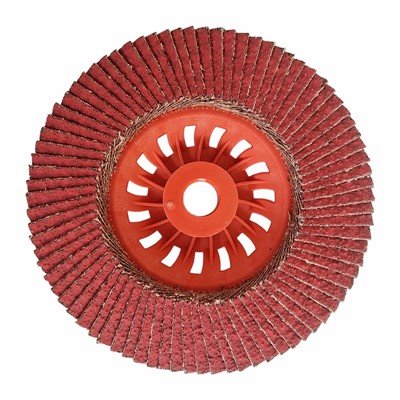
First off, let’s get on the same page about what each of these discs is, because half the time the price gap comes down to what they’re actually made of. Let’s start with the basics: flap discs are those round, abrasive tools you mount on an angle grinder to grind, sand, finish—cut through metal, smooth welds, strip paint, all that messy workshop stuff. The three big players most people compare are ceramic flap discs, zirconia alumina (or just zirconia, we call it that shorthand) flap discs, and aluminum oxide (alox, everyone says alox) flap discs.
Let’s start with aluminum oxide, the cheapest of the three. This is the disc you’ll find in the bargain bin at the hardware store, the one that’s $2 for a 4.5-inch disc. It’s made from, well, aluminum oxide, which is a pretty common abrasive, and the manufacturing process is straightforward. The flappers are usually made of a single layer of this grit, no fancy bonding, and it wears out fast—like, you’ll be grinding a 10-inch weld on a piece of steel, and before you know it, the grit is all dull, the flappers start curling up, and you have to swap it out mid-job. For small, quick jobs, like smoothing a tiny spot on a fence gate, this is fine. But if you’re running a production shop, or grinding heavy welds all day, or working with hard metals like stainless steel or cast iron? Alox just doesn’t cut it. You’ll go through twice as many of them as you would a ceramic disc, and that adds up way more than the initial price difference.
Next up is zirconia alumina, the middle kid. It’s a step up from alox, made by fusing aluminum oxide with zirconium oxide to make a tougher, more heat-resistant grit. Most budget-to-midrange flap discs you’ll see are zirconia, they’re priced in between alox and ceramic, usually like $3 to $5 for a 4.5-inch disc. They last longer than alox—like, maybe 1.5 to 2 times as long—and they can handle a bit more heat, so they don’t clog as fast when you’re grinding metal. But here’s the catch: zirconia still dulls out pretty quick when you’re working hard. If you’re grinding thick stainless steel, or doing heavy stock removal (that’s workshop talk for stripping a bunch of material fast), the grit will wear down, glaze over, and you’ll lose a lot of cutting power before the whole disc is done. Also, zirconia is prone to what we call “loading” in the trade—when metal shavings get stuck between the flappers, which makes the disc work harder, wear faster, and even leave a rough finish. I’ve seen guys go through 5 or 6 zirconia discs on a single big weld project, and that’s where the cost starts adding up.
Now, ceramic flap discs, the ones I supply. Let’s get the price out in the open first: a 4.5-inch ceramic disc is usually around $6 to $9, so yeah, it’s 2 to 3 times more expensive than the cheap alox ones, and about 50% more than zirconia. But here’s the thing that most people don’t get: it’s not about the upfront price, it’s about the cost per use. That’s the metric I always tell people to focus on, not the sticker on the shelf. Ceramic grit is not your average abrasive—it’s made from tiny, sharp, angular ceramic grains that are engineered to fracture (that’s “self-sharpening” for short) when they hit hard pressure. So when you’re grinding, those little grains don’t just dull—they break off, revealing a brand new, sharp edge underneath. That means they stay sharp way longer than alox or zirconia. How much longer? From my experience and the data I’ve seen with my customers, a good quality ceramic flap disc lasts 3 to 5 times as long as alox, and 1.5 to 2 times as long as zirconia.
Let me give you a real example to make this concrete. Last month, I worked with a small fabrication shop that does custom railings. They were using zirconia discs for grinding the heavy welds on their posts, and they were going through 8 discs per 10 linear feet of railing. Their cost per foot for discs was about $32 (8 discs x $4 each). After they switched to our ceramic discs, they only used 3 discs for the same 10 feet. Their cost per foot dropped to $21 (3 discs x $7 each). That’s a 34% savings on the disc side alone, plus they finished the job faster because they weren’t swapping discs every 15 minutes. And that’s not a fluke—so many of my regular customers tell me the same thing. The upfront cost is higher, but the downtime and material waste from using cheap discs is way more expensive than the extra you pay for ceramic.
But wait, there are a few caveats here, because not all ceramic flap discs are created equal. I’ve had guys come to me saying “your ceramic discs are too expensive, I found cheaper ones on Amazon” and when I ask what happened, they say they wore out just as fast as zirconia. Oh right, the cheap ceramic discs use lower grade ceramic grit, or they skimp on the bonding material that holds the flappers to the disc core. A good ceramic disc has a strong resin bond, and the flappers are arranged in a way that lets air flow through, which keeps the disc cool. Cheap ceramic discs might have thin flappers that curl after a few uses, or they might use ceramic grit that’s not properly sized, so it dulls instead of self-sharpening. That’s why I always tell people to look at the grit grade, and the backing material—aluminum backing is better than fiberglass for durability, for example.
Now, let’s talk about when ceramic is actually worth it, and when you can save money with the cheaper options. If you’re doing tiny, one-off jobs: like grinding a few nails, smoothing a small rust spot on a fence, or stripping paint off a door, alox is totally fine. You’re not going to wear out a disc on that, so the $2 disc is the way to go. If you’re doing medium jobs: like building a small metal frame, or refinishing a car body, zirconia is probably enough. You’ll get more life than alox, and the price is still low enough that it’s not a huge deal if you go through a few. But if you’re doing heavy, high-volume work: production welding, grinding thick stainless steel or cast iron, stock removal on metal parts, jobs where you’re running your angle grinder for hours a day? Ceramic is a no-brainer. The time you save not swapping discs, the better finish you get (ceramic leaves a smoother grind, so you don’t have to spend extra time sanding later), and the lower cost per disc makes it worth every extra dollar.
Another thing a lot of people overlook is safety. Cheap discs, especially alox, can sometimes shatter under pressure when you’re grinding hard. I’ve seen a guy get hit in the arm with a broken disc because he was using a worn-out alox disc on thick steel—scary stuff. Ceramic discs, because of how they’re bonded, are more durable, and the self-sharpening means you’re not pushing as hard on the grinder, which reduces the risk of kickback and disc breakage. That’s another hidden cost you don’t think about: if you get injured on the job, that’s lost time, workers’ comp, all that stuff that adds up way more than the extra 50 cents per disc.
Let’s also clear up a common myth: some people think ceramic is only for metal. Wait, no, it works great for other materials too. I have customers who use it for grinding fiberglass, or even wood for shaping, because it’s sharp and stays clean, so it doesn’t clog like alox or zirconia does. But it really shines on hard, dense materials like stainless steel, cast iron, and alloy steel—those are the ones where the self-sharpening makes the biggest difference.
Now, let’s talk about what affects the price of each type of disc, because it’s not just the grit. For alox, the main factors are the price of aluminum oxide, which is pretty stable, and low manufacturing costs. Zirconia is a bit more expensive because zirconium oxide is a separate material, and the fusion process to make the grit takes more energy. Ceramic is the most expensive to make because the ceramic grains are engineered in labs (well, industrial labs, not fancy university ones) to have that self-sharpening property, and the resin bonds are formulated to handle high heat and pressure, so they don’t break apart fast. Also, good ceramic discs have a thicker core, so they don’t bend or warp under heavy use, which means they last longer too.
I get it, when you’re running a small business, every penny counts. I started this supply business because I got tired of seeing guys buy cheap discs that wore out fast, costing them more in the long run. I don’t push ceramic on people if it’s not right for their job—if you’re a hobbyist doing one small project, I’ll tell you to grab the alox. But if you’re working 8-hour days on metal, I’m gonna tell you that investing in ceramic will save you time and money, no question.
A lot of my customers come to me after trying the cheap stuff, and they say “why didn’t I switch sooner?” That’s the reaction I love. The upfront price is the sticker shock, but when you do the math on how many discs you go through, the downtime, the extra finishing work, it’s obvious. Let me put it in simpler numbers: if a ceramic disc costs $7 and lasts 10 uses, that’s 70 cents per use. A zirconia disc that costs $4 and lasts 5 uses is 80 cents per use. An alox disc that costs $2 and lasts 2 uses is $1 per use. Oh, and that’s before you count the time you spend stopping to swap discs, which is time you could be billing or moving on to the next job.
Wait, also, don’t forget about the finish. Ceramic discs leave a smoother grind than the other two, so you don’t have to spend as much time sanding to get it ready for painting or welding. I had a customer last year who makes custom stainless steel sinks—he was using zirconia before, and had to spend 20 minutes sanding every weld after grinding. Since switching to my ceramic discs, that time is down to 5 minutes per sink, and his product quality is better, so he can charge more for each sink. That’s a huge win that has nothing to do with disc cost, but it’s a direct result of choosing the right abrasive.
Now, I’m not here to bash the other discs—they have their place. Alox is great for hobbyists, small jobs, light sanding. Zirconia is a solid middle ground for general workshop use, small production runs. But when you’re doing heavy, high-volume work, ceramic is the clear winner, even with the higher upfront price. The key is buying a good quality ceramic disc, not the cheap ones that look the same on the shelf but are made with inferior materials. That’s why I only supply ceramic discs that are made with high-grade grit, strong resin bonds, and aluminum cores—no cutting corners, so my customers get the performance they pay for.
If you’re still on the fence, here’s what I suggest: grab one ceramic disc, one zirconia, and one alox for the same job, and test them side by side. Grind the same weld, count how many minutes each lasts, how much material you remove, and how smooth the finish is. I bet you’ll be surprised at how much better the ceramic disc performs, even if it costs more upfront.
At the end of the day, the price of a flap disc isn’t just the number on the tag. It’s the number of jobs you can finish, the money you save on replacement discs, the time you don’t waste swapping out worn tools, and the quality of your work. If you’re ready to stop throwing money away on cheap discs that wear out fast, or you want to find out if ceramic is right for your specific jobs, hit me up and we can chat. No pressure, no salesy nonsense—just a conversation about what works best for your workshop.
Before I wrap this up, let’s just recap to make sure we didn’t miss anything:
- Alox: Cheapest, good for small light jobs, high cost per use for heavy work
- Zirconia: Middle price, better than alox for medium jobs, good general purpose
- Ceramic: Higher upfront cost, best for heavy/high-volume work, lower long-term cost, better finish, safer
That’s the breakdown, plain and simple. I’ve been doing this long enough to know that every workshop has different needs, and I don’t believe in a one-size-fits-all approach. But for anyone who’s tired of swapping discs every 10 minutes, or spending more on cheap discs than they should, ceramic is worth checking out.

If you want to talk more about which disc is right for your jobs, or get a sample to test, feel free to reach out. I’m here to help, not push products that don’t work for you. Let’s make your workshop run smoother, save you time and money, and get you better results.
Flap Disc References
- Abrasive Technology Association. (2021). Performance Metrics for Angle Grinder Flap Discs. Industrial Abrasive Journal.
- Metal Fabrication Workshop Safety and Efficiency Report. (2022). National Association of Metal Finishers.
- Cost Analysis of Abrasive Tools for High-Volume Metal Production. (2023). Manufacturing Process Quarterly.
- Self-Sharpening Abrasive Grain Technology: Ceramic vs. Conventional Abrasives. (2020). Journal of Abrasives and Grinding Technology.
Henan Yandisc Hardware Tools Co., Ltd.
As one of the most professional ceramic flap disc manufacturers and suppliers in China, our products have good reputation in the market. Please feel free to wholesale high quality ceramic flap disc made in China here from our factory. Customized orders are welcome.
Address: Zinan Road, High-tech Industrial Development Zone, Zhengzhou, Henan, China
E-mail: info@yandisc.com
WebSite: https://www.yandisc.com/
