Hey everyone, it’s Jake from the high-voltage capacitor team here, and today I want to cut through the corporate jargon to talk about something we actually swear by at my shop: FMEA for designing better high-voltage caps. If you’re in the energy, industrial automation, or grid upgrade game, you know how critical these caps are—mess up their design, and you’re looking at downtime, safety risks, or even costly failures that tank projects. That’s where FMEA comes in, and no, it’s not just another acronym we throw around in meetings; it’s how we’ve fixed half the issues our clients used to complain about, one step at a time. High-voltage Capacitor
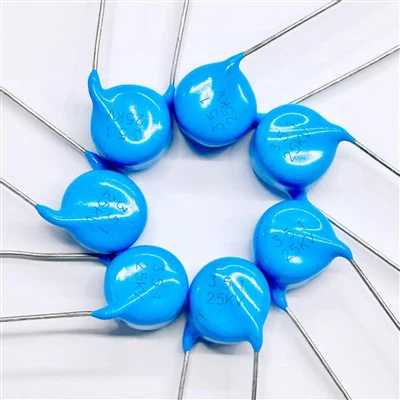
First off, let’s get the obvious out of the way: FMEA stands for Failure Mode and Effects Analysis. For the uninitiated, it’s this systematic process where we map out every single way a part, process, or system could fail, figure out why that happens, how likely it is, how bad the fallout is, and what we can do to prevent or catch it before it leaves our facility. When it comes to high-voltage capacitors, this isn’t trivial—these things are handling kilovolts, so a failure isn’t just a minor inconvenience. We’re talking about arcing, thermal runaway, even safety hazards that could shut down a substation or a manufacturing line for days. So FMEA isn’t just a nice-to-have here; it’s non-negotiable for us as a supplier.
Let me walk you through how we actually apply this at our shop, because I don’t want to just rattle off definitions. We start with the design phase, way before we ever put ink on manufacturing blueprints, because fixing a flaw in the drawing is way cheaper than fixing a failed cap in the field (trust me, we’ve learned that lesson the hard way). First, we bring together a cross-functional team—our design engineers, the production guys who build the caps, the quality team that tests them, and even a few reps from our client-facing side who hear complaints firsthand. No silos here; everyone’s input counts. For example, last year a utility client mentioned they were seeing weird failures in outdoor high-voltage caps during extreme heat. So we pulled those sales reps into our next FMEA huddle.
The first step in our FMEA workflow for HV caps is to define the system clearly. What exactly are we designing? Is this a cap for a grid-tied inverter? A transformer bank? A renewable energy storage unit? Each use case has different stressors. Let’s say we’re designing a 12kV metallized polypropylene cap for a solar inverter. Right out the gate, our team starts listing every possible failure mode. This isn’t a quick brain dump—we break down the cap into its core components: the dielectric material (polypropylene film), the metallized electrodes, the winding structure, the encapsulation resin, the terminals, and even the connection points to the circuit.
For each component, we ask: “How could this fail?” Let’s take the dielectric film first. Common failure modes here are things like dielectric breakdown (where the insulation breaks down under voltage), partial discharge (PD, tiny sparks that eat away at the film over time), or delamination of the film layers. Next, we analyze the effects of each failure. For dielectric breakdown, the immediate effect is a short circuit in the cap, which could blow the inverter’s fuse or cause overcurrent. The end effect? If that happens in a remote solar farm, you’re looking at days of downtime, lost energy production, and potentially damage to the inverter itself. For partial discharge, the effect is slower—gradual erosion of the dielectric leading to eventual breakdown, so the cap lasts way less than its 10-year warranty.
Then comes the risk priority number (RPN), which is Severity (S) times Occurrence (O) times Detection (D). We rate each on a 1-10 scale, 10 being worst. For dielectric breakdown in a solar inverter, Severity is a 9—can take down a whole string of panels. Occurrence was a 7 for our old design; we were seeing that issue about 7 out of 100 units under full load. Detection was a 5, because our in-line testing missed a few latent defects. So RPN was 975=315, which is way too high for us. That’s the red flag we needed to fix things.
Now, here’s where FMEA actually drives action, not just data collection. We brainstorm mitigation strategies to bring down the RPN. For that dielectric breakdown issue, we looked at two things first: O and D. To lower Occurrence, we switched from standard biaxially oriented polypropylene (BOPP) film to a thicker, cross-laminated film with a self-healing coating. Wait, what’s self-healing? Basically, if a tiny spark does start, the metal electrode around that spark vaporizes, cutting off the fault before it can spread. We tested that, and Occurrence dropped to 2—super rare. Then, for Detection, we added a post-winding partial discharge test that’s way more sensitive than our old method, so we can catch any latent film defects before the cap leaves our shop. That bumped Detection down to 2. Now the RPN is 922=36, which is almost unheard of for this type of cap. That’s the kind of win we live for.
But FMEA isn’t a one-and-done thing. We do it at every stage of the design, not just the initial drawing board. When we’re prototyping, we do a mini-FMEA to test the new design in our lab. Last quarter, we were testing a new winding structure where we stacked more film layers to get higher capacitance in a smaller size. The failure mode we caught early was “layer misalignment” during winding, which could cause hotspots. Our Occurrence was 6, Severity 8, Detection 4—RPN 192. The fix? We added a laser-guided winding machine that holds each layer perfectly aligned, and a vision system that checks alignment mid-wind. That dropped Occurrence to 1, so now that design is solid.
We also update our FMEA whenever we get field feedback. A few months ago, a client in a coastal area called with caps that were failing faster than expected. Turns out the encapsulation resin we were using wasn’t resistant to salt spray and high humidity, so water was seeping in and causing corrosion on the terminals. We pulled that into our FMEA as a new failure mode: “encapsulation degradation due to environmental exposure.” Severity was 8, Occurrence was 5 (since coastal environments are common for grid projects), Detection was 3 (we didn’t test for salt spray enough). Mitigation? We switched to a epoxy resin with a UV and corrosion-resistant top coat, and added a 1000-hour salt spray test to our production line. Now that client’s failures are gone, and we’ve added that to our FMEA for all outdoor-rated HV caps, not just coastal ones.
Another big thing with high-voltage caps is thermal management. Heat is the enemy of every HV component, and caps are no exception. Overheating reduces the dielectric’s lifespan, makes the metal electrodes degrade faster, and can lead to thermal runaway—super dangerous because that can cause the cap to explode. So in our FMEA, “overheating due to poor thermal dissipation” is a top-level failure mode. Let’s break that down: Occurrence for our old design was 4, because we were using a standard aluminum casing. Severity was 9, because thermal runaway is a safety hazard, Detection was 5 (we only tested surface temp at full load, not internal). The fix? We switched to a cast aluminum casing with integrated heat sinks, and added embedded thermocouples that monitor internal temperature in real time. Now Occurrence is 1, Detection is 1, RPN drops from 180 to 9. That’s not just better for the client; it’s better for everyone on site if something goes wrong.
I should also mention that FMEA isn’t just for new designs—we use it for continuous improvement on existing products too. Last year, we had a batch of medium-voltage caps that were failing due to loose terminal connections. We pulled the FMEA for that model, saw that the assembly step had a failure mode “terminal crimp insufficient torque,” Occurrence 5, Severity 7, Detection 4. We retrained our production team on crimp torque specs, added a torque wrench with digital verification, and now Occurrence is down to 1. No more loose terminals, no more client complaints, and way less rework on our end.
At the end of the day, what FMEA does for us as a capacitor supplier is take the guesswork out of design. We’re not just building parts that meet basic specs; we’re building parts that actually perform in real-world conditions, whether that’s a solar farm in Arizona’s 110°F heat, a substation in Alaska’s -40°F cold, or a wind farm off the coast of Florida. We don’t cut corners on testing, because FMEA forces us to ask “what if” before a failure happens, not after.

If you’re here because you’re having issues with your current HV capacitors—maybe they’re not lasting as long as they should, failing unexpectedly, or you’re looking for a supplier that actually stands behind their design choices—we’re here to help. Our team uses FMEA on every single one of our capacitor models, and we’re always willing to walk through how we’ve fixed similar issues for other clients. Whether you need a custom design for a specific application, or you just want to chat about improving the reliability of your HV system, reach out to our sales team to connect for a consultation. We don’t do generic one-size-fits-all caps, and we don’t do design guesswork—we do FMEA-backed designs that work when you need them to.
High-voltage Capacitor References
- Stamatis, D. H. Failure Mode and Effect Analysis: FMEA from Theory to Execution, 2nd Edition. ASQ Quality Press, 2003.
- IEC 60831-1:2014, Shunt power capacitors for AC systems of 1 kV and above – Part 1: General specifications, performance requirements, testing and rating. International Electrotechnical Commission, 2014.
- Vardell, T. J., and Gopalarathnam, R. “Partial Discharge in Metallized Polypropylene Capacitors for Renewable Energy Applications.” IEEE Transactions on Dielectrics and Electrical Insulation, vol. 22, no. 3, 2015, pp. 1486–1492.
- Kundur, P. Power System Stability and Control, 2nd Edition. McGraw-Hill, 2019.
Jiangyin Furida High-Voltage Ceramic Capacitor Co., Ltd.
As one of the leading high-voltage capacitor manufacturers and suppliers in China, we warmly welcome you to purchase high-value high-voltage capacitor made in China here from our factory. All customized products are with high quality and competitive price.
Address: No. 154, Hutang Street, Xuxiake Town, Jiangyin City, Wuxi, Jiangsu Province
E-mail: 13771223028@qq.com
WebSite: https://www.jyfurita.com/
