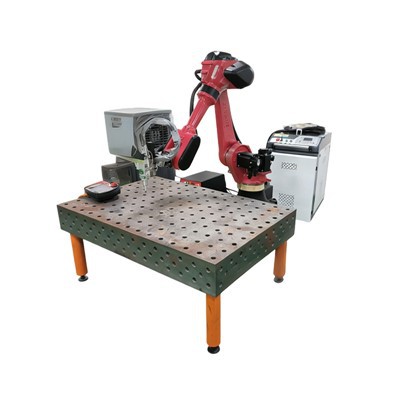
As a leading provider of stamping robots, I am frequently asked whether our stamping robots can be used for 3D stamping. This is a highly relevant question given the increasing demand for complex and precise 3D stamped parts in various industries such as automotive, aerospace, and consumer electronics. In this blog post, I will explore the capabilities of our stamping robots in the context of 3D stamping, discussing the technical aspects, challenges, and benefits. Stamping Robot
Understanding 3D Stamping
Before delving into the use of stamping robots for 3D stamping, it is essential to understand what 3D stamping entails. Traditional stamping is a cold-forming process that uses dies and presses to shape flat sheets of metal into desired forms. These forms are typically two-dimensional or have simple geometric features. In contrast, 3D stamping involves creating parts with complex three-dimensional shapes, often with varying depths, curvatures, and angles.
3D stamped parts are used in a wide range of applications where high strength, lightweight, and precise dimensions are required. For example, in the automotive industry, 3D stamped components such as engine blocks, chassis parts, and body panels contribute to the overall performance and safety of vehicles. In the aerospace sector, 3D stamped parts are used in aircraft structures, wing components, and turbine blades.
Technical Capabilities of Our Stamping Robots
Our stamping robots are designed with advanced technology and high precision to meet the demanding requirements of modern stamping processes, including 3D stamping. Here are some of the key technical features that enable our robots to perform 3D stamping:
1. High Precision Motion Control
Our stamping robots are equipped with state – of – the – art motion control systems that can achieve extremely high levels of precision. This is crucial for 3D stamping, as even small deviations in the robot’s movement can result in defective parts. The robots can accurately position the workpiece and the stamping tool, ensuring that the stamping process is carried out with the required accuracy in all three dimensions.
2. Multi – Axis Movement
To create complex 3D shapes, the stamping robot needs to be able to move in multiple axes. Our robots are designed with multiple degrees of freedom, allowing them to perform movements in the X, Y, Z axes, as well as rotational movements. This multi – axis movement capability enables the robot to approach the workpiece from different angles and positions, which is necessary for 3D stamping operations.
3. Force and Pressure Control
3D stamping often requires the application of different levels of force and pressure at various points on the workpiece. Our stamping robots are equipped with force and pressure sensors that can precisely control the amount of force applied during the stamping process. This ensures that the workpiece is deformed correctly without being over – stamped or under – stamped, resulting in high – quality 3D stamped parts.
4. Integration with Stamping Tools
We understand the importance of seamless integration between the stamping robot and the stamping tool. Our robots are designed to be easily integrated with a wide variety of stamping dies and tools, including those specifically designed for 3D stamping. This integration allows for efficient and effective stamping operations, reducing setup times and improving overall productivity.
Challenges in 3D Stamping with Robots
While our stamping robots have the technical capabilities to perform 3D stamping, there are still some challenges that need to be addressed:
1. Tool Design and Manufacturing
Designing and manufacturing stamping tools for 3D stamping is a complex and challenging task. The tools need to be able to create the desired 3D shape with high precision, and they also need to withstand the high forces and pressures involved in the stamping process. Our team of engineers works closely with tool manufacturers to develop optimized tool designs that are compatible with our stamping robots.
2. Workpiece Handling
Handling 3D workpieces can be more difficult than handling flat sheets. The irregular shapes and sizes of 3D workpieces can make it challenging to grip and position them accurately. Our stamping robots are equipped with advanced gripper systems that can be customized to handle different types of 3D workpieces. These grippers are designed to provide a secure hold on the workpiece while minimizing the risk of damage.
3. Process Optimization
3D stamping is a complex process that requires careful optimization to ensure high – quality results. Factors such as the stamping speed, force, and tool path need to be carefully adjusted based on the specific requirements of the 3D part. Our technical support team provides comprehensive process optimization services to our customers, helping them to achieve the best possible results with our stamping robots.
Benefits of Using Our Stamping Robots for 3D Stamping
Despite the challenges, there are numerous benefits to using our stamping robots for 3D stamping:
1. Increased Productivity
Our stamping robots can perform 3D stamping operations at a much higher speed than manual labor. This increased productivity can lead to significant cost savings for our customers, especially in high – volume production environments.
2. Improved Quality
The high precision and repeatability of our stamping robots ensure that each 3D stamped part meets the required quality standards. This reduces the number of defective parts and improves the overall quality of the production process.
3. Flexibility
Our stamping robots can be easily programmed to perform different 3D stamping tasks. This flexibility allows our customers to quickly adapt to changes in production requirements, such as producing different types of 3D parts or changing the production volume.
4. Safety
Stamping operations can be dangerous, especially when dealing with high – force presses. Our stamping robots eliminate the need for manual intervention in the stamping process, reducing the risk of workplace accidents and injuries.
Conclusion
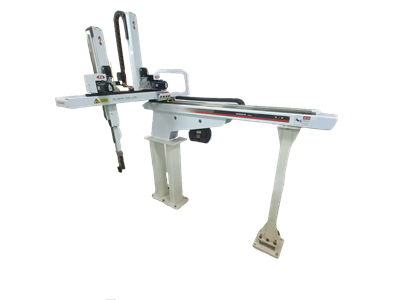
In conclusion, our stamping robots are well – suited for 3D stamping applications. With their advanced technical capabilities, our robots can overcome the challenges associated with 3D stamping and provide numerous benefits to our customers. Whether you are in the automotive, aerospace, or consumer electronics industry, our stamping robots can help you to achieve high – quality, efficient, and cost – effective 3D stamping production.
Stamping Robot If you are interested in learning more about how our stamping robots can be used for 3D stamping or are considering purchasing stamping robots for your production line, please feel free to contact us. Our team of experts is ready to provide you with detailed information and support to help you make the right decision.
References
- "Advanced Manufacturing Technologies for 3D Stamping", Manufacturing Engineering Journal, Volume 23, Issue 4, 2022
- "Robot – Assisted Stamping Processes: Current State and Future Trends", Robotics and Computer – Integrated Manufacturing, Volume 38, 2023
- "Precision Control in 3D Stamping Operations", Journal of Precision Engineering and Manufacturing, Volume 24, Issue 6, 2021
Dongguan Chuanglida Intelligent Equipments Co., Ltd.
As one of the most professional stamping robot manufacturers and suppliers in China, we also support customized service. Please feel free to buy discount stamping robot in stock here from our factory. For price consultation, contact us.
Address: Room 201, Building 2, No. 61, Shachang 1st Road, Dalang Town, Dongguan City, Guangdong Province
E-mail: haoguangli001@outlook.com
WebSite: https://www.boruntestech.com/
