If you’re running a CNG mother station, you know the dryer is the unsung hero that keeps your whole operation from going sideways. I’ve been in the game for 12 years—first as a tech out in the field, now running our mother station supply biz—and I can’t tell you how many times I’ve seen folks skip dryer maintenance until it’s too late. A failed dryer doesn’t just ruin gas quality; it clogs pipelines, wrecks compression equipment, and leaves you with heaps of downtime that costs way more than a few routine checks. Today, I’m breaking down exactly what we teach all our clients about keeping their CNG dryers running smooth—no fancy jargon, just real, actionable steps we live by. CNG Mother Station

First off, let’s get on the same page: what kind of dryer are we even talking about here? Most CNG mother stations use either desiccant dryers (the most common, since they handle high pressure and big gas volumes) or membrane dryers, but desiccants are the workhorses for large-scale operations. Whatever type you’re rolling with, the core maintenance rules don’t change much, but I’ll flag the small differences for each as we go. Trust me, knowing your dryer’s specs is non-negotiable—we keep a cheat sheet for every system we sell, and every client gets a printed copy on day one.
Let’s start with the daily stuff. This isn’t some 2-hour deep dive—15 minutes tops, before your first shift or after the last truck leaves, depending on your schedule. I make every tech on my team do a walkthrough every single day, no exceptions. For desiccant dryers, you’re checking two main things: the inlet and outlet pressure dew point, and the pressure drop across the dryer. Dew point is just how much water vapor is in the gas—for CNG, we need -40°F (-40°C) or lower, no exceptions. If it’s higher than that, your desiccant’s probably toast. Pressure drop is the difference between what’s going into the dryer and what’s coming out; if that jumps more than 1 PSI from your baseline, something’s clogged or messed up inside.
For membrane dryers, daily checks are simpler—just a quick dew point test and a visual scan for any leaks (those thin membrane tubes crack easier than you think if you’re not watching). We teach all our clients to keep a portable dew point meter on site, not the cheap $50 ones from Amazon—get the industrial ones, they’re worth every penny. I’ve seen a client save $10k in downtime because their daily dew point check caught a small leak in the membrane on day 2, before it took out their compressor. Also, don’t skip the sump drains! Every dryer has a water trap that collects condensed liquid, and if you let that buildup, it eats at internal components. I’ve got a guy who swore “it never clogs for me” until it flooded his desiccant bed—cost him a full replacement and 3 days of no production. Pro tip: set a reminder, even if you think it’s fine. On our big stations, we automate the drains, but even then, we do a manual check once a week to make sure the auto-valves aren’t stuck.
Now, weekly maintenance—this is where most people cut corners, and it’s the stuff that keeps big problems away. First, you need to inspect the desiccant if you’ve got that type. Desiccant gets two jobs: adsorb water during the drying cycle, and then regenerate (heat up or purge with dry gas) to reset for the next batch. But over time, it breaks down into fine dust, gets contaminated with oil, or just wears out. Once a week, pull the inspection port (we mark a safe lockout/tagout spot for this, so no one’s rushing) and take a look. If you see more than a quarter-inch of dust at the bottom of the vessel, or any discolored desiccant (it should be pale blue or tan, depending on the type—if it’s gray, black, or crumbly, it’s bad), you need to clean or replace it.
Wait, how do you clean desiccant without replacing it? We teach clients to blow compressed, dry nitrogen through the bed at low pressure to flush out dust, but only if the desiccant’s still intact. If it’s already breaking, just replace it—skipping that leads to pressure spikes that blow out seals. Also, check the regeneration cycle! That’s the part most people mess up. The desiccant only works if it gets fully regenerated every cycle. If your purge gas flow is too low, or the heater isn’t hitting the right temp (usually 300-350°F for heated desiccants), then the next round can’t absorb water. Weekly, test the purge flow meter and the heater temperature gauge. For membrane dryers, weekly check is swapping out the inlet filters—those get full of dirt and pipeline debris way faster than you think, and a clogged filter kills membrane performance. I’ve seen a small station go from 30k gallons a day to 18k just because they skipped a filter swap for 3 weeks.
Monthly maintenance is the deep dive, the stuff that only needs to happen once a month but makes the biggest difference. First, full cycle test: run the dryer through a full adsorption/regeneration cycle, from start to finish, and log every reading. Pressure drop, dew point, purge time, heater output—write it all down, and compare it to your baseline from when the dryer was new. If pressure drop is up 2 PSI, or dew point is 10 degrees higher than normal, that’s a red flag. Also, inspect all the valves—solenoid valves, cycle valves, check valves. These things get hammered with high pressure, and seals wear out. Listen for weird clicking noises when the cycle switches, or use a ultrasonic leak detector to find tiny leaks you can’t see. I always tell clients: if a valve is 5 years old, plan to replace it this quarter—don’t wait for it to break mid-shift.
Another monthly task for desiccant dryers: check the inner vessel for corrosion. If your gas has any trace hydrogen sulfide (which a lot of raw natural gas does), it eats at steel over time, especially where the desiccant dust builds up. We install corrosion monitors on all our mother station dryers, but if you don’t have one, stick a small camera through the inspection port every month. If you see pitting, get it sandblasted and coated—ignoring that leads to a ruptured vessel, which is catastrophic. For membrane dryers, monthly job is pressure testing the inlet and outlet piping—any small crack there can let humid gas in and kill your drying efficiency. And don’t forget the drain lines: blow them out with compressed air to make sure they’re not blocked with sludge from the sump.
Quarterly and yearly stuff is the long-game maintenance that keeps your dryer running for 10+ years, instead of 5. Quarterly, you need to do a full desiccant change (if you’ve got that type) or a membrane module deep clean. For desiccants, we recommend a full replacement every 3-5 years, but if you do your weekly and monthly checks, you can extend that to 7 years no problem. When you replace it, make sure you use the exact grade the manufacturer specifies—we get so many calls from clients who used “cheap desiccant” and it ruined their vessel. Cheap junk crumbles way faster, and the dust gets everywhere. Also, when you’re loading the new desiccant, tap the vessel gently as you go to make sure it’s packed evenly—uneven packing causes uneven pressure, which ruins the cycle.
Yearly, bring in a third-party tech if you don’t have one on staff full-time, to do a full integrity test on the dryer vessel and all pressure components. This is non-negotiable for CNG stations, since they deal with high pressure (usually 3,000 to 5,000 PSI). I can’t stress this enough: I’ve seen a vessel fail because someone skipped the yearly test, and it took out half the station. Also, calibrate all your gauges and sensors every year—pressure gauges drift, dew point meters get off, and you can’t trust the readings if they’re not calibrated. We include yearly calibration checks for all the equipment we sell, but if you bought from someone else, don’t skip that.
Wait, I can’t leave out the most common mistake I see: ignoring the small stuff early on. Let me give you an example. Last year, a client of mine called in panic because their dryer was failing, and they’d lost 2 days of production. When I showed up, the pressure drop was up 3 PSI, and the desiccant was full of oil. Turns out, they skipped the weekly filter swap, so oil from their compressor got through, coated the desiccant, and killed its absorption ability. The fix? $1,200 for a new filter set and a desiccant clean—if they’d done the weekly check, it would’ve been $50 for a filter, no downtime. That’s the thing with CNG dryer maintenance: it’s all about catching the small issue before it becomes a big, expensive disaster.
Also, don’t sleep on the ambient conditions. If your station is in a super hot or humid climate, you need to adjust your cycle times. Desiccants in 100°F weather take longer to regenerate, so if you keep the same purge time as in a dry, 70°F area, you’re not getting a full reset. In cold weather, make sure the drain lines don’t freeze—insulate them, and if you’re in a place that gets below freezing, add trace heating tapes. I’ve seen a station in Wyoming lose a whole day because their drain lines froze over a weekend—$150 worth of insulation would’ve prevented that.
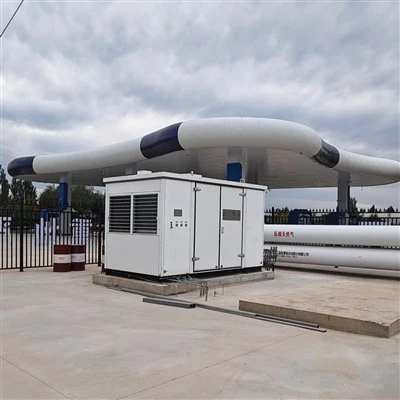
At the end of the day, the dryer is only as good as the maintenance you put into it. We build our CNG mother station dryers to run 24/7, 365 days a year, but even the best gear needs regular TLC. If you’re running a mother station and you’re not sure how to set up a maintenance schedule, or you need help with a current dryer issue, we’ve got a team of field techs who’ll come out to your site, do a full audit, and make a custom maintenance plan just for you. We don’t do one-size-fits-all, because every station’s gas volume, climate, and equipment is different.
So if you’re tired of unplanned downtime, high repair bills, or gas quality issues that make your customers unhappy, hit us up to talk through your needs. We’ve got years of experience working with CNG stations of all sizes, from small regional ones to large national operations, and we can help you keep your dryer running smooth for years to come.
CNG Standard Station References
- Gas Processors Suppliers Association. (2021). Engineering Data Book: Section 9 – Natural Gas Dehydration.
- Compressed Gas Association. (2019). Maintenance Guidelines for Compressed Natural Gas Systems and Equipment.
- Hydraulic Institute. (2020). Best Practices for Rotary Equipment Maintenance in Natural Gas Processing Applications.
- American Petroleum Institute. (2018). API Standard 16K: Specification for Pipeline Valves and Fittings for High-Pressure Natural Gas Service.
Qingdao Lenado Intelligent Equipment Co., Ltd.
Qingdao Lenado Intelligent Equipment Co., Ltd. is one of the most experienced CNG mother station manufacturers and suppliers in China. We have world-leading production equipment and strong manufacturing capabilities. Please rest assured to wholesale bulk customized CNG mother station from our factory.
Address:
E-mail: genkegasstation@163.com
WebSite: https://www.cnggasstation.com/
