Hey everyone, if you’ve stayed at a mid-to-upscale hotel in the last couple of years, odds are you’ve crossed paths with one of our delivery robots—zipping past the lobby at 1.2 mph, stopping way faster than any over-tired front desk agent, and dropping off late-night pizza, forgotten toothbrushes, or even a bottle of champagne for an anniversary. As the lead engineer at our hotel delivery robot company, I get asked all the time how these little guys actually work. No, they don’t have a tiny human inside controlling them (that’s the 2024 version we tested for a beach resort and scrapped because the intern got carsick), and they’re not magic—they’re just super nerdy gear that does what big, awkward human staff used to do. Let’s break it down like I’m explaining it to my cousin who thinks Roomba is a tech company. Hotel Delivery Robot
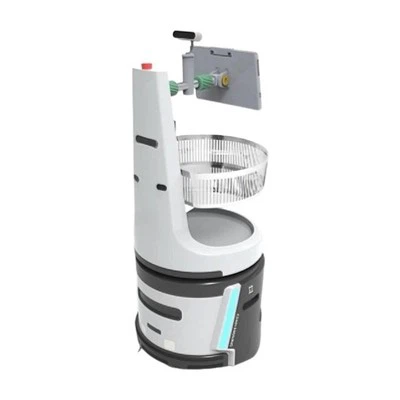
First off, let’s talk about what a robot’s day looks like before it even rolls out of its “bunk” in the back of the kitchen or lobby. When a hotel guest texts the front desk (or uses the hotel’s app) to request delivery, say, a pair of slippers for their sore feet or a stack of extra towels, that request doesn’t just pop up on a clerk’s screen. It gets sent straight to our robot management software—let’s call it RMS for short, because every tech thing needs an acronym, even if it’s bad. RMS checks which robots are free, not mid-charge (they dock themselves at a hidden charging station near the kitchen when their battery hits 20%—no one has to remind them), and in the right part of the hotel. Then it assigns the closest, most available robot to the task. That’s way faster than a human having to run from the front desk to the storage closet to the elevator, right? We’re talking 90 seconds from request to the robot being ready to go, vs. 5 minutes for a tired bellhop. That’s the first trick: we don’t let the robot make dumb decisions like choosing where to go—we do the heavy lifting of scheduling, so it can focus on moving around without running into a maid cart.
Now, when the robot is assigned a job, it’s got two main things on its plate: getting from Point A (like the kitchen) to Point B (Room 312) safely, and not losing the package it’s carrying. Let’s start with the moving part, because that’s the one that freaks hotel staff out the most. Our robots don’t use GPS, by the way. GPS is garbage inside buildings—walls, metal elevator shafts, even that giant marble lobby counter you thought was just for show mess with it. Instead, they use a tech called LiDAR, which stands for Light Detection and Ranging. Think of it as a tiny, spinning laser on the top of the robot that shoots out millions of little light beams every second. Those beams bounce off every wall, chair, luggage cart, and even the random water bottle a guest left in the hallway, and the robot builds a real-time map of the hotel as it moves. It compares that map to the blueprint we upload during installation (we walk every hallway, count every step, even mark where the fire extinguishers are because we don’t want a robot running into one) so it knows exactly where it is at all times—within an inch, which is way more precise than GPS ever could be.
But LiDAR is just for mapping. We also add a bunch of regular cameras and ultra-sonic sensors on the sides and bottom of the robot for close-up stuff. The cameras catch, say, a kid chasing a ball down the hallway—LiDAR might see a moving blob, but the cameras tell the robot that blob is a human, not a backpack or a rolling suitcase. The ultra-sonic sensors, the little round bumps you can’t really see, are like the robot’s “feelers” for stuff right in front of it, like a stack of luggage left by a guest’s door. If LiDAR spots a big object 10 feet ahead, the camera identifies it, and the ultrasonic sensors double-check if it’s close enough that the robot needs to slow down or stop. We even tested this in a hotel that had a weirdly placed coffee bar cart that got wheeled around every morning—our robots learned to avoid it without us having to re-program the map, which is way better than the old system where we had to add a new “no-go zone” every week.
Then there’s the elevator problem. Let’s be real—hotel elevators are chaos. Some have buttons on both sides, some only work from the lobby, some get stuck when a group of teens cram in. Our robots don’t push buttons like you and me. They have little robotic arms that extend to press the elevator call button when they get to the elevator bank. And because we already have them mapped, they know which elevator is closest, and even if it’s going up or down. If a bunch of people are in the elevator, the robot will wait 10 seconds to make sure it’s not crushing anyone’s suitcase, then roll in after everyone, hit its floor, and wait by the door until it’s time to go. We also have a setting where if a guest is waiting by the elevator, the robot will let them go first—we learned that lesson when a wedding party got mad that a robot delayed their grand entrance down the hotel hallway. Oops.
Okay, so the robot is moving, it’s not crashing, now it needs to get the package to the right room. That’s the compartment part. Our robots have a locked storage compartment, right? Only the guest can open it. Here’s how that works: when the robot pulls up to Room 312, it sends a push notification to the guest’s phone that says something like “Your slippers are here! Tap ‘Open Door’ on the app or enter your 4-digit code at the robot.” The code is sent automatically when the delivery is assigned, and it expires 10 minutes after the robot shows up, so no one can walk by and open it. We also tested a voice unlock feature at a resort in Florida, but that got messy when a parrot heard the code and squawked it to everyone on the floor. So we stuck with app taps or short codes—way less parrot chaos.
Wait, what about weird hotel stuff? Like a guest on crutches, or a dog that thinks robots are new toys, or a hallway that’s under construction with cones? Our robots are programmed to handle that, too. If they get to a hallway that’s blocked, they don’t just stop. They send a message to the front desk that says “Hallway 3 is blocked, rerouting to Room 312” and they pick a new path using the map. We even had a robot that got distracted by a golden retriever at a pet-friendly hotel—instead of running away, it stopped, waited 30 seconds, and then went the other way around. The guests thought it was the funniest thing ever, and we added that “dog avoidance” feature as an optional setting for pet-friendly hotels.
Now, let’s talk about the boring stuff that makes this all work: charging. Our robots only need to charge for 4 hours to run 16 hours—perfect for hotels that are open 24/7. They dock themselves at a charging station we install in a back closet or the kitchen when their battery drops to 20%, so the hotel doesn’t have to move them. No staff has to wheel them around to charge them at the end of the day, which saves like 2 hours of work a day for the bell staff. That’s a big win—hotels don’t hire extra people to do robot stuff, they save time on the stuff robots can do.
I get why some people are skeptical, though. A few months ago, a hotel in Chicago posted a TikTok of a robot getting stuck in a revolving door and spilling pizza everywhere. We felt that. That’s why we test every robot in real hotel environments before we install them—we take them to hotels with revolving doors, tight hallways, even those weird curved lobbies that architects think look cool but are a nightmare for robots. We don’t sell one-size-fits-all robots, either. A boutique hotel in Paris with narrow staircases? We make our robots a little skinnier, smaller to fit the stairs. A big resort in Las Vegas with long hallways and lots of golf carts? We add a faster navigation setting so they don’t get run over. It’s all tailored to how the hotel works, not the other way around.
At the end of the day, these robots aren’t here to replace hotel staff. They’re here to take the annoying, repetitive stuff off their plates—running extra towels, picking up forgotten items, delivering late-night snacks so the front desk agent can actually help a guest who lost their wallet instead of sprinting up to the 5th floor with a toothbrush. We’ve worked with hundreds of hotels, from small 20-room boutique spots to big chain resorts, and every time a hotel adds our robots, the staff says they have way more time for the stuff that actually matters—making guests feel welcome, handling special requests, not tripping over luggage carts.
If you’re a hotel owner or operations manager looking to add delivery robots to cut down on staff burnout and make guest requests faster, we can hook you up. We’ll send a team to walk your property, map all the hallways and elevators, and give you a free quote tailored to your hotel’s size and layout. No pushy sales calls, no hidden fees, just robots that actually work for your hotel, not against it. We’ll even test a robot at your property for a week so you can see how it works in your specific space before you commit. No parrot problems guaranteed (though if you have a pet-friendly hotel, we can adjust for that, too).
Oh, and one last fun fact: the first hotel we tested our robots at was a small beach resort in Florida, and we had a robot that kept delivering sunscreen to guests by the pool before we added a “pool area” no-go zone. Now that’s fixed, obviously. Every small mistake like that makes the robots better, so when you work with us, you get robots that have been tested in all the weird, messy, real-world hotel situations, not just a lab.

If you want to chat more about how we can make delivery work for your hotel, just reach out. We’re here to help you make staff’s lives easier and guests happier, one little rolling robot at a time.
Pets Companion Robot REFERENCES
- Robotics 24/7. (2023). "LiDAR vs. Camera-Based Navigation for Indoor Service Robots."
- Hotel Technology Today. (2024). "The Impact of Delivery Robots on Front Desk Staff Productivity in Mid-Scale Hotels."
- IEEE Transactions on Robotics. (2022). "Environmental Mapping and Obstacle Avoidance for Indoor Mobile Robots in Dynamic Hotel Environments."
Hangzhou Janz Intelligent Technology Co., Ltd.
As one of the most professional hotel delivery robot manufacturers and suppliers in China, we offer a wide range of products with superior quality. Please feel free to buy advanced hotel delivery robot at competitive price from our factory. Contact us for quotation.
Address: Room 240, 2nd Floor, 289-16, Creative Road, Yinhu Street, Fuyang District, Hangzhou City, Zhejiang Province
E-mail: amy@hzjanz.com
WebSite: https://www.simplexrobots.com/
