Alright, let’s cut to the chase here—if you’ve ever tried making something like buttery croissants, chocolate chip cookies, or sweet Danish pastries, you know high-fat dough is a whole different beast. It’s not like the regular pizza dough or white sandwich bread you might be used to. The fat (think butter, shortening, even palm oil) doesn’t just add flavor; it changes how the dough rises, feels, and behaves in every step. And as a proofer supplier, I’ve gotten so many questions from bakeries, small-scale food makers, even home bakers who’ve struggled with this exact stuff. Like, “My laminated croissant dough won’t rise right!” or “My high-fat sweet dough collapses in the proofer!” Sound familiar? Let’s break this down the way we actually figure it out in our shop, no fancy textbook jargon (unless it’s needed, I’ll explain it). Proofer

First, let’s get real about what high-fat dough even is. We’re talking dough where fat makes up like 15% or more of the total flour weight—sometimes way higher, like 30% for laminated pastries. Regular bread dough is more like 5-8% fat, right? The problem is fat does two key things: it coats the flour’s gluten proteins, so they can’t link up as easily, and it slows down yeast activity. Yeast needs to feed on sugars and get comfy to make carbon dioxide (that’s what makes dough rise), but fat acts like a barrier. That’s why a lot of people think high-fat dough doesn’t rise—but that’s not true, it just needs different conditions than low-fat dough. That’s where the proofer comes in, because a regular old cabinet proofer that works for bread might mess up high-fat dough hard.
Wait, let’s start before the proofer even gets involved, because you can’t fix bad dough in the proofer. I’ve seen bakers mix laminated dough too warm, and the butter melts right into the flour before they even put it in the proofer. Melted fat makes the dough slick, no structure. So first step for handling high-fat dough: dough temperature control during mixing. You see, when you mix dough, friction from the mixer raises the temp. For high-fat stuff, we aim for dough temp between 65-70°F (18-21°C)—not higher. If it hits 75°F, the butter starts to soften too much, especially for laminated dough. That’s why a lot of professional mixers have chill jackets now, but even for smaller setups, adding ice instead of water helps. I remember a local bakery owner who was making croissants and his dough was always collapsing in the proofer—turns out he was mixing with room temp water, and his dough was hitting 78°F. Once he switched to ice water and kept it at 68°F, the difference was night and day. That’s the first win.
Now, when it’s time to put the dough in the proofer—this is the make-or-break part. Most people think proofer settings are just “warm and humid,” but for high-fat dough, those numbers are way more specific. Let’s split this into two main types of high-fat dough because they act totally different: laminated (croissants, Danishes) and sweet dough (brioche, coffee cakes, maybe even cookie dough that rises).
For laminated dough first—those are the ones with layers of butter and dough, right? They need to rise slowly, not fast. If you crank the proofer to 90°F like you would for bread, the outer layer of dough will rise too quick, and the butter inside will melt before the layers can set. What do we do instead? We set the proofer to 80-82°F (27-28°C) and humidity around 75-80%. Wait, why lower temp than bread? Because high fat slows yeast, but too much heat makes the surface of the dough dry out or the fat break down. Humidity is key here too—if it’s too dry, the dough forms a skin, and the CO2 can’t escape, so it either doesn’t rise or cracks. For laminated dough, we also don’t want the proofer to be too crowded—those layers need space to expand without pressing on each other. I always tell bakers to leave at least an inch between each piece, because if they’re touching, one might rise more than the other and mess up the shape.
Then there’s sweet high-fat dough—brioche is the big one here, that’s like 30% butter. Brioche is super rich, soft, and when it rises, it’s delicate. The proofer settings here are a tiny bit higher than laminated, but still not bread-level. We do 82-85°F (28-29°C) and humidity around 80-85%. Why? Because brioche has more sugar and fat, which make it a bit denser, so yeast needs a touch more warmth, but not too much. If it’s too hot, the butter in brioche will seep out, making a greasy mess at the bottom of the pan. I’ve had a customer who made chocolate brioche rolls and his proofer was set to 90°F, and every batch had that greasy puddle—turned out the butter was melting out of the dough. Dropping 5 degrees fixed that entirely.
Wait, but proofer design matters here too, right? Not just settings. A lot of people get cheap countertop proofers that have uneven air flow—one side is 85°F, the other is 78°F. For high-fat dough, that inconsistency is a disaster. Half the batch rises too fast, half not enough. That’s why as a proofer supplier, we tell customers to look for proofers with even air distribution—like a circulating fan that blows air evenly, not just heating elements in one corner. Also, for high-fat dough, you don’t want the proofer to have super dry, hot air that dries the surface. A proofer with humidification that’s controlled, not just a little pan of water, is a game-changer. Those cheap ones just add random moisture, so sometimes it’s too wet and the dough gets moldy, sometimes too dry.
Another big thing: proofing time. High-fat dough takes longer to proof than low-fat. Bread might take 1-2 hours, but high-fat dough can take 2-3, even 4 hours for laminated stuff. The mistake here is rushing it—bakers see it’s not rising in an hour and crank the temp, which we already know is bad. We’ve found that if you let the dough proof slowly at those lower, consistent temps, the yeast has time to eat the sugars and make CO2, and the gluten (even with the fat coating) can stretch enough to hold the gas. I had a small pastry shop that was trying to cut proofing time by 30 minutes to get more batches out, and their croissants went from flaky to dense as a rock. Once they stopped rushing, they not only got better product but didn’t have to throw away half the batch that collapsed.
Wait, what about if the dough is already ready, but you can’t bake it right away? That’s a common question too. For high-fat dough, you can’t just leave it in the proofer longer. If it’s proofed and you hold it in the proofer, the yeast will keep working until it uses up all the food, and the dough will deflate. So we tell bakers, if the dough is fully proofed, put it in the fridge immediately. The cold slows the yeast down, and for laminated dough, it keeps the butter solid so the layers don’t mix. That’s a trick we see top bakeries use all the time—they proof overnight in the fridge, which actually makes the flavor better too. But you have to make sure the proofer doesn’t over-proof it, that’s the line.
Also, common mistakes to avoid that I see all the time. First, using too much fat, obviously, but that’s a recipe issue, not proofer. Second, proofing high-fat dough on cold baking sheets. If the sheet is cold, when you take the dough out of the proofer and put it on the sheet, it shocks the dough, and the rising stops. So we always pre-heat the baking sheets a little (like 10 minutes in a warm oven) before putting the proofed dough on. That small step makes a huge difference in the final rise. Third, not covering the dough properly in the proofer. Wait, you need to cover it so it doesn’t dry out, but not with plastic wrap that’s too tight—traps too much moisture, makes the dough sticky. We use perforated plastic covers or linen cloths that are damp, so they let air circulate but keep the humidity up. For laminated dough, sometimes we put them in covered baskets, but not sealed ones.
Let me give you a real example, something that happened last month. A customer who runs a cookie and Danish shop bought one of our medium-sized proofers, and was having issues with his almond Danish—they were flat, not flaky, and greasy. He was using a cheap old proofer that had uneven heat, cranking it to 90°F, and proofing for 1.5 hours. We sent our tech out to check the new proofer he got, adjusted the settings to 81°F, 78% humidity, told him to proof for 2.5 hours, and use our proofer’s perforated covers. The first batch after that? He sent a pic, and they were tall, flaky, no grease. He said it was the best Danish he’d made in a year. That’s the stuff we live for, right?
Wait, also, yeast choice matters a little, but not as much as proofer conditions. For high-fat dough, we use instant yeast instead of active dry, because it activates faster at lower temps. But even instant yeast won’t work if the proofer is too hot or too cold. The proofer is the environment that lets the yeast do its job without messing up the dough’s structure. As a supplier, we spend a lot of time testing different high-fat doughs in our proofers, because every bakery has their own recipe—some use butter, some use shortening, some add eggs. So we can adjust proofer settings based on what they’re making, which is something the cheap proofers can’t do because they don’t have precise controls.
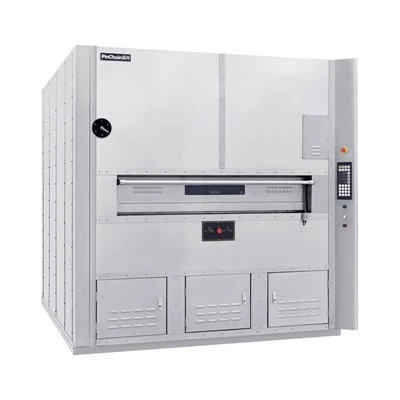
Let’s wrap this up with what it all boils down to, no fancy stuff. High-fat dough isn’t “difficult” to proof, it just needs specific conditions: not too hot, not too dry, consistent air flow, and enough time. The proofer is the main tool that makes that happen, but you have to pair it with good dough practice (mixing at the right temp, not rushing proofing). If you’re still struggling with high-fat dough—like it’s not rising, it’s greasy, it collapses when you bake it—there’s a good chance your proofer settings are off, or your proofer isn’t delivering consistent conditions.
Proofer If you’re a bakery owner, a small food maker, or even a home baker who’s tired of wasting dough on bad proofs, we’d love to chat about your setup and what you need. No pushy sales stuff, just real advice from people who work with this every day. Whether you have a tiny countertop setup or a full commercial bakery, we can help you get the right proofer settings for your high-fat dough so your croissants, brioche, Danishes, and whatever else turns out the way it’s supposed to—flaky, soft, flavorful, no grease, no collapsed dough.
References
- Cauvain, S. P. (2015). Breadmaking: Improving Quality. Woodhead Publishing.
- Hui, Y. H. (2006). Bakery Products Science and Technology. Wiley-Blackwell.
- Fitzgerald, C. (2020). “Key Factors in Proofing High-Fat Doughs.” Baker’s Journal, Vol. 192, No. 4, pp. 34-37.
- Kamel, B. S., & Stauffer, C. E. (1993). Yeast Technology. AACC International.
Guangdong Pinchain Machinery Co., Ltd.
As one of the most professional proofer manufacturers and suppliers in China, we have world-leading production equipment and strong manufacturing capabilities. Please feel free to wholesale advanced proofer made in China here from our factory.
Address: Room 302, Building 9, CIMC High tech Intelligent Manufacturing Center, No.3 Chanxing 1st Road, Xianyong Village, Chencun Town, Shunde District, Foshan City, Guangdong Province
E-mail: kowa@bakingmachinery.com
WebSite: https://www.bakingsmachinery.com/
