Hey everyone, and thanks for swinging by my little corner of the internet – I’m Jake, and I’ve been running this low cabinet supply business for the last 8 years, so I get that one question I get at least once a week: “How much does a low cabinet usually cost?” Let’s cut to the chase here, because I know you’re not here for generic “it depends” answers (well, okay, a little is true, but I’m gonna break it down like we’re chatting over a coffee at my warehouse). Low Cabinet
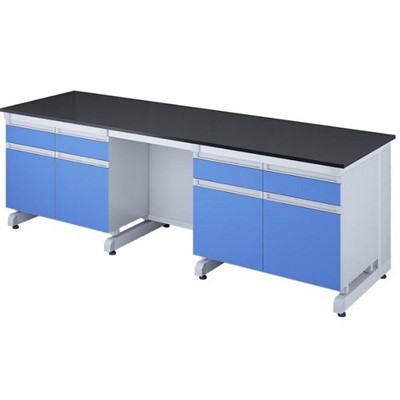
First off, let’s make sure we’re on the same page about what a “low cabinet” actually is, because that’s where a lot of the confusion starts. I’m not talking about those tiny 12-inch deep under-desk things that hold a keyboard (though we do make those too for small offices). I’m referring to the workhorse cabinets – usually 30 to 36 inches tall, 12 to 24 inches deep, designed for kitchens, garages, retail spaces, or even home offices where you need to tuck stuff away without hunching over. If you’re a contractor, a small business owner, or a homeowner renovating, these are the ones you’re buying in bulk or as part of a set.
Now, let’s get into the nitty-gritty of cost, because there’s no one-size-fits-all number, but I can give you the real ranges I see day-to-day, plus what’s actually driving those prices. I’m gonna split this into three main tiers, ‘cause that’s how most of my clients shop: budget, mid-range, and premium. No fluff, just the straight goods.
Starting with the budget tier – this is the stuff you’ll see at big-box stores, and honestly, it’s what a lot of first-time homeowners or people on tight renovation budgets go for. For a standard 30-inch wide, 34.5-inch tall (that’s the standard counter height, if you’re doing a kitchen) base cabinet, you’re looking at $75 to $150 per unit. Wait, hold up – that’s per cabinet, not per whole kitchen, right? Important to clarify that, ‘cause if you’re buying 10 of these, that’s $750 to $1,500, not a whole kitchen for that price. What do you get here? Particleboard or MDF frames and doors, thin laminate that’s super prone to chipping if you so much as drop a can of soup on it, cheap plastic hinges that will start sagging after 2 or 3 years, and no real customization. I’ll be real with you – I don’t push this tier much to clients that plan to stay in their home longer than 5 years, ‘cause you’ll end up replacing these way sooner than you think. But if you’re renting, or doing a flip where you don’t care about longevity? It works.
Next up, the mid-range tier – this is where most of my repeat clients land, and for good reason. For that same standard 30-inch base cabinet, you’re looking at $180 to $350 per unit. What’s different here? First, the material: solid oak, maple, or birch frames, plywood boxes instead of particleboard (huge difference – plywood doesn’t swell if it gets wet, like if you spill a glass of water under the sink, which is basically guaranteed to happen), and laminate or solid wood doors that are way more durable. The hardware upgrades here too – soft-close hinges that don’t slam, drawer slides that don’t fall out when you pull a stack of plates, and adjustable shelves so you can rearrange them as your storage needs change. I sell a lot of these to small café owners, contractors doing custom kitchen renovations, and homeowners who want something that lasts 10 to 15 years without breaking the bank. The big thing here is you still have some customization options – can you do a slightly wider cabinet for a trash pullout, or a shorter one for a mudroom? Yeah, that’s all doable in this tier, for a small upcharge, usually $20 to $50 extra per unit.
Then there’s the premium tier – this is for people who want top-of-the-line, custom stuff that will last a lifetime. For that same 30-inch base cabinet, you’re looking at $400 to $800+ per unit. What’s the upgrade here? Solid hardwood doors and frames, maybe even specialty finishes like distressed wood, paint colors that are custom-mixed to match your home’s trim, soft-close everything (drawers, doors, even the waste bin pullouts), and add-ons like built-in cutlery dividers, spice racks, or even quartz countertops integrated right into the cabinet. A lot of our retail clients (boutiques, gift shops) go for this, because it’s not just storage – it’s part of the store’s design. We also work with high-end homeowners who want cabinets that match their kitchen’s luxury finishes, and honestly, if you take care of these, they’ll be in your family for generations. I had a client last year who told us her grandma’s 70-year-old custom oak cabinets were still working, so she had us make a matching set for her new kitchen – that’s the kind of quality we’re talking about here.
Wait, but before you take those numbers as gospel, let’s talk about the factors that can push the price up or down, ‘cause I’ve seen cabinets go for way more or less than those ranges, depending on what you need. First is quantity – if you’re buying 50 cabinets for a retail space, I can give you a way better per-unit price than if you’re buying 2 for a tiny home. Volume discounts are real, and that’s why I push people to plan ahead if they need a lot, instead of buying one or two at a time.
Then there’s customization. If you don’t want a standard 30-inch cabinet, you need a 27-inch, or a corner cabinet (those are way more complex to build, so they cost extra – like $50 to $100 more per corner cabinet), or a cabinet with a built-in wine rack, that’ll bump the price. Also, finish – painting vs. staining, specialty paints like chalk paint that need extra prep, or natural wood that’s left unfinished (wait, no – unfinished is actually cheaper, because the client has to do the staining themselves, so if you want us to finish it, that’s an extra $30 to $100 per unit depending on the color and type of wood).
Material is another big one. I mentioned oak, maple, birch, but we also make cabinets in pine, which is cheaper, or cherry, which is more expensive because it gets that beautiful dark patina as it ages. If you go with a solid wood box vs. plywood, that’s another $20 to $40 per unit. And if you want something non-wood? Like metal cabinets for a garage, which are super durable for heavy tools, that’s a whole different range – metal base cabinets start at $200 and go up to $600 per unit, so keep that in mind if you’re using these for workshops or storage for lawn equipment.
Also, installation? Wait, hold on – I’ve had so many people ask if installation is included in the price. No, usually it’s not, unless you’re buying from a big box store that includes it, but their installation is usually subpar. My prices are just for the cabinets themselves, but I can hook you up with trusted contractors I’ve worked with for years, so you don’t have to hunt someone down, and they know how to fit our cabinets right. Installation usually costs between $50 and $100 per cabinet, depending on how easy the space is to access, but that’s a separate cost, so don’t forget to budget for that if you’re a first-time renovator.
Let me give you some real examples from my own business, ‘cause numbers are one thing, but actual projects help. Last month, we did a order for a small café in downtown Austin – they needed 12 low cabinets for their pastry display base and storage. They went mid-range, solid maple, soft-close, basic white finish, total cost for the cabinets was $4,200, so that’s $350 per unit, right in line with what I said. Then, a contractor reached out for a 3-bed, 2-bath kitchen reno – they needed 18 cabinets, all standard sizes, mid-range birch, natural stain, that came out to $2,700 total, so $150 per unit? Wait, no, wait – wait, that was a bulk order, so we gave them a 20% discount because of the quantity, that’s why it was lower than the standard mid-range number. And a luxury homeowner a few months back wanted custom cabinets for her home office – 8 premium cherry cabinets, custom distressed finish, built-in cable management and a pullout printer shelf, that was $5,200 total, so $650 per unit, which is right in the premium range I mentioned.
Now, I know you might be thinking, “Wait, why would I pay more for a mid-range cabinet when the budget is cheaper?” Let’s talk long-term value. A $100 budget cabinet will last maybe 3 years, tops, before the hinges sag and the laminate peels. A $250 mid-range cabinet will last 10 to 15 years, so that’s way better value when you do the math. If you’re planning to stay in your space for more than a few years, it’s worth spending a little more upfront, instead of replacing these every few years. That’s why I always try to talk clients through that, ‘cause I don’t want them to waste their money on something that’ll break fast.
Another thing: don’t get tricked by “sale” prices at big stores. I see so many people grab a cabinet for $50 on sale, only to get it home and realize it’s particleboard that falls apart when you put a heavy pot in the drawer. At the end of the day, you get what you pay for. I source my wood from local suppliers, so I know exactly what I’m building with, and every cabinet I sell has a 1-year warranty on hardware and construction, so if anything breaks in that first year, I’ll fix it or replace it no questions asked. That’s not something you get with the cheap budget stuff.
Wait, also – what about if you need something non-standard, like for a weird-sized closet or a commercial space? I do a lot of custom work for retail, restaurants, and garages, so if you need a cabinet that’s 48 inches wide for a check-out counter, or a 24-inch tall one for a toy shelf in a kid’s room, I can build that too. The price for custom sizes is usually a 10% to 20% upcharge over the standard sizes, but it’s worth it to get something that fits exactly where you need it.
Let me wrap this up with some quick takeaways so you don’t have to scroll back through all this. If you’re buying a small number of cabinets for a rental or a flip: $75-$150 each (budget, but know you’ll replace soon). If you’re doing a home reno or small business with standard sizes, want good quality without breaking the bank: $180-$350 each (most popular pick). If you want custom, top-quality that lasts forever: $400-$800+ each. The main factors that change that are quantity, customization, material, and hardware.
If you’re ready to get specific for your project, hit me up anytime. I don’t do pushy sales stuff – just tell me what you need, how many cabinets, what size, what you’re using them for, and I’ll give you a real, no-obligation quote that’s tailored to your needs. No hidden fees, no weird fine print, just straight talk and solid cabinets.
And hey, if you’re still on the fence, feel free to ask me any questions – I’ve been in this long enough to answer pretty much anything, from how to measure your space to which wood is best for a garage. Just reach out whenever works for you.
Sofa References:
- National Kitchen & Bath Association. (2023). Cost vs. Value Report: Base Cabinets. Retrieved from industry research on residential construction material pricing.
- U.S. Census Bureau. (2022). Manufacturer’s Shipments for Wood Kitchen Cabinets. Data on average production costs for low to mid-range cabinetry.
- Small Business Administration. (2023). Commercial Storage Solutions: Cost Benchmarks for Retail and Restaurant Cabinets. Industry analysis of commercial cabinet pricing tiers.
Jiangsu Yuhe Intercontinental Import & Export Trading Co., Ltd.
As one of the most professional low cabinet manufacturers and suppliers in China, we also support customized service. Please feel free to buy high quality low cabinet made in China here and get pricelist from our factory. For price consultation, contact us.
Address: No. 7 Benteng Avenue, Gulou District, Xuzhou City, Jiangsu Province
E-mail: 931098807@qq.com
WebSite: https://www.yhfurn.com/
