Hey there, let’s cut to the chase right up front – if you’re in the metal fabrication game, you’ve definitely stared at a stack of thick steel or aluminum sheets and wondered: Can my metal CNC router actually slice through this stuff? I’ve been on the supplier side of this for over a decade now, so I’ve fielded this question more times than I can count, from hobbyists with a tiny 3-axis router in their garage to big fabricators knocking out parts for construction and aerospace. Spoiler alert: The answer isn’t a flat “yes” or “no” – it depends on way more than just the machine itself, and I’m gonna break that down like I’m chatting with a buddy over coffee. Metal CNC Router

First off, let’s get one thing straight: A lot of folks mix up a metal CNC router with a plasma cutter, waterjet, or laser cutter, and that’s where the confusion starts. Traditional wood routers have spinning bits that dig into soft materials, but metal CNC routers for heavy-duty work are built totally different. When I sell one to a shop, I don’t just push a “click here to buy” button – I walk them through what their actual cutting needs are, because that’s the make-or-break part. If you’re trying to cut ¼” thin aluminum sheets for sign panels? Any mid-range metal CNC router will handle that no problem. But if you’re going after 2” thick carbon steel for structural beams or 3” thick titanium for aerospace parts? You can’t just grab any router off the shelf and call it a day.
Let’s talk specs, because numbers matter here, but not in the boring textbook way. The big ones you need to look at are spindle power, tooling, rigidity, and the cutting method you’re using. Spindle power is non-negotiable for thick metal. A typical hobbyist metal router might have a 2-3 HP spindle, and that’s only good for thin stuff – like up to ½” max for aluminum, thinner for steel. But if you’re going for thick metal, you need a spindle that’s 7 HP or higher, and preferably a heavy-duty one that’s liquid-cooled (air-cooled spindles overheat fast when you’re pushing through dense metal for minutes at a time). I’ve seen guys try to run a 3 HP spindle on 1” steel, and they burned out two spindles in a week – that’s a $2k mistake right there.
Then there’s rigidity. Think about it: when you’re spinning a 1” diameter carbide bit at 10,000 RPM pushing through 2” of steel, any wobbly frame or loose axis will make the bit chatter, ruin the cut, or even snap the tool. A lot of cheap metal CNC routers are built with aluminum frames, which flex. The good ones have cast iron frames or heavy-gauge steel gantries that don’t give an inch. Last year, a guy from a local farm supply shop came to me after buying a no-name router online – he was trying to cut 1.5” steel for trailer frames, and his machine was shaking so bad he could feel it from 10 feet away. We swapped it for a rigid steel-framed model, and he’s been cranking out parts all year without a single issue.
Tooling is another huge piece of the puzzle. You can’t use the same router bits for 1” steel that you use for ¼” aluminum. For thick metal, you need carbide-tipped or solid carbide end mills, not the cheap HSS bits you buy at the hardware store. I tell all my customers: don’t skimp on tools. A solid carbide end mill might cost $50, but it’ll last 10x longer than a HSS bit that costs $10, and it’ll give you a clean, accurate cut instead of one that needs hours of finishing work. Also, chip evacuation matters – when you’re cutting thick metal, you’re generating a ton of hot chips that can weld themselves back to the cut if you don’t blast them with coolant. We usually recommend flood coolant systems for thick cuts, not just misting – that keeps the bit cool and washes the chips away so they don’t jam the cut.
Wait, and let’s not forget cutting speed and feed rate. These are the numbers that tell the machine how fast to move the bit and how much pressure to apply, and they’re totally different for thick vs thin metal. If you run the same feed rate for 2” steel that you run for ½” aluminum, you’re gonna snap your bit, or burn through the spindle, or both. We pre-program our routers with default settings for common metals (aluminum, steel, stainless, brass, titanium) at different thicknesses, and we always tell new customers to test on a scrap piece first – no jumping into a production run with a setup you haven’t tried. I had a guy a few months back who skipped that step, and he ruined a $500 chunk of 2” titanium before he even got the first good cut. Lesson learned.
Now, what’s the actual limit here? I get asked all the time: “What’s the thickest metal your router can cut?” The honest answer is: up to 4” for some specialized models, but that’s for specific metals (like aluminum, which is softer than steel). For carbon steel, the max I’d recommend for consistent, production-quality cuts is around 2.5”. Anything thicker than that, and even a high-end metal CNC router will start to struggle – you’ll need a different tool or a secondary process like plasma to finish the cut. I’ve tested our top-of-the-line model on 3” thick mild steel, and it works, but it’s slow – like 2 inches per minute – so it’s not great for bulk orders. For a fabricator that needs to knock out 50 parts a week, that’s not efficient, but for a small job shop doing custom large parts, it’s totally doable.
Let’s bust a common myth here, too: A lot of people think metal CNC routers can’t compete with plasma or waterjet for thick metal. Yeah, plasma is faster for cuts over 3”, but a router gives way better precision. If you need a cut that’s within 0.005” tolerance for things like custom machine parts or aerospace components, a router is the way to go – plasma leaves a rough edge that needs grinding, and waterjet is super expensive per cut. That’s where our customers really shine – they can get a clean, accurate cut on 2” steel that needs zero secondary work, which saves them time and money in the long run.
Now, let’s talk about what I actually see in the field, because that’s way more real than specs on a sheet. Last year, I worked with a structural steel fabricator in Detroit that was using a 10 HP metal CNC router we sold them. They were cutting 2” thick A36 steel for bridge supports. Before that, they were using a manual flame cutter, which took forever and left edges that needed 2 hours of grinding per part. With our router, they cut the same part in 15 minutes, no grinding, and the tolerance was so tight they didn’t have to adjust any welds. That’s the difference a good machine makes, and it’s all tailored to their specific thickness and metal type. On the flip side, I had a guy with a small sign shop try to use our router for ¾” thick aluminum for big custom signs – he was using the wrong tool, running too slow, and burning up a spindle after 3 months. We fixed his setup, and now he’s cranking out signs faster than ever.
Wait, so is there a case where a metal CNC router can’t cut thick metal? Sure – if you try to use a machine that’s underpowered, if you use cheap tools, if you skip the coolant, or if you try to cut something like 6” thick hardened steel (that’s basically uncuttable with a standard router, you’d need a grinding machine or a specialized EDM). But for most common metals that fabricators work with – steel, aluminum, stainless, brass – up to 2.5” thick? A good metal CNC router can absolutely handle that.
Let’s wrap this up with the practical stuff, because at the end of the day, you don’t care about specs – you care about getting the job done right, on time, without blowing money on repairs or bad parts. If you’re wondering if your current router can handle thick metal, start by checking the spindle power (is it 7 HP+ liquid-cooled?), is the frame rigid (cast iron or steel, not aluminum?), and are you using the right end mills and coolant? If those boxes are checked, you’re good to go. If not, maybe it’s time to upgrade.
And hey, if you’re in the market for a metal CNC router that can handle thick metal, don’t settle for the cheapest option. I’ve seen way too many guys get burned by no-name machines that break after a few months. We don’t just sell machines – we help you set up your tooling, adjust your feed rates, and train your team so you’re not guessing how to use it. No pushy sales, no fine print, just straight talk about what will work for your shop.
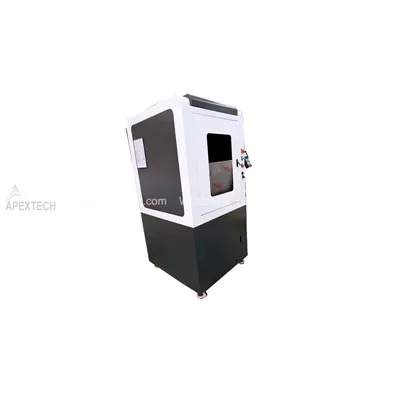
If you’re tired of struggling with thin cuts, rough edges, or broken spindles, hit us up to chat through your project. Tell me what metal you’re working with, how thick you need to cut, and what kind of parts you’re making – I’ll give you a real answer, no sales pitch garbage. We’ve helped shops of all sizes, from small job shops to big aerospace companies, get the cuts they need. Don’t let thick metal hold you back – let’s figure out the right setup for you.
Wood Turning Machine Reference 1: Metal Cutting Institute. CNC Router Capabilities for Heavy-Duty Metal Fabrication. 2022.
Reference 2: SME. Tooling and Machining Solutions for Thick Metal Cutting. 2021.
Reference 3: Fabricating & Metalworking. Machine Rigidity and Its Impact on Precision Metal Cutting. 2023.
Jinan APEX CNC Technology Co., Ltd.
Jinan APEX CNC Technology Co., Ltd. is one of the most professional metal cnc router manufacturers and suppliers in China, specialized in providing high quality products and service. Please feel free to buy high-grade metal cnc router for sale here from our factory. For more information, contact us now.
Address: YuanZhuang Industrial Park, Shizhong District, Jinan City, China
E-mail: info@apex-cnctech.com
WebSite: https://www.can-cnc.com/
