If you’ve ever walked through a manufacturing warehouse, a logistics distribution center, or a third-party packaging facility, you’ve almost certainly seen pallets shrink-wrapped tight before they hit a loading dock. That tight, uniform wrap isn’t just for neatness—it’s what protects your products from dust, moisture, theft, and damage during transit. But behind every reliable stretch wrap load sits a far more complex piece of equipment than a roll of film and a rotating turntable: the stretch wrapper control system. As someone who’s spent the last 12 years building and refining these systems for operations across North America, I’ve seen first-hand how a great control system doesn’t just run a wrapper—it solves problems you didn’t even know you had, until your line goes down. Stretch Wrapper Control System
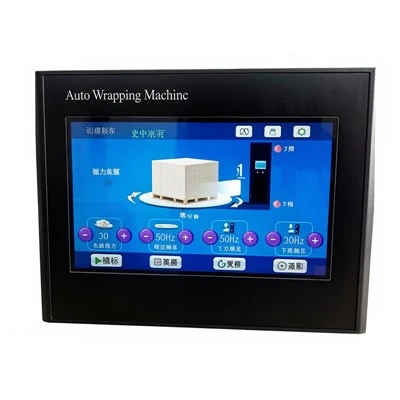
Let’s start with the basics. A stretch wrapper control system is the brain of your stretch wrapping equipment, designed to automate and manage every step of the stretch wrapping process. Unlike the old, manual wrappers that required an operator to walk around a pallet pulling film tight, modern control systems integrate with the wrapper’s physical components: the rotating arm or turntable that spins the pallet, the film carriage that unwinds and stretches the film, the sensors that track the load’s size and shape, and the touchscreen or interface that lets operators input settings. The core job? Deliver consistent, repeatable wrapping results for every single load, no matter how fast your line moves.
I’ve talked to hundreds of operators who think a stretch wrapper is just a box that spins and pulls film, and that’s where so many gaps show up. A control system turns that basic machine into a tool that adapts to your products. Let’s break down the key parts that make up a good one, because not all control systems are created equal—and that’s where bad setups start to cost you money.
First, load detection. Most good control systems use a mix of photo eyes, ultrasonic sensors, or even load profiling technology to automatically measure a pallet’s height, width, and weight. That might sound trivial, but think about it: if you have a pallet of 24 small boxes one day and a pallet of 4 large drums the next, you don’t want to manually adjust the wrapping every time. A solid control system will scan the load as it enters the wrapper, adjust the number of film wraps, the stretch percentage, and the height of the wrap automatically. I once worked with a beverage distributor who was wasting 15% more film a month because their old system required an operator to input load heights manually—and half the time, they skipped the step, leading to either too much film (wasted cash) or too little (damaged pallets during shipping). A new control system cut their film usage by 12% in the first three months, just from eliminating human error.
Next, stretch control. This is the heart of what makes a wrap strong enough. Stretch percentage is how much you pull the film before it wraps around the load: 100% stretch means you pull the film twice its original length, 150% is three times, etc. Too little stretch, and the film is loose; too much, and you risk breaking the film, wasting material, or crushing delicate products like pharmaceuticals or electronics. Modern control systems let you set variable stretch profiles, so a load of heavy steel drums can use 200% stretch (tight and secure) while a load of light paper products uses 100% stretch (no risk of crinkling). Even better, some advanced systems use feedback from the film carriage to adjust stretch in real time. If a load has a wobbly spot that would cause uneven tension, the control system will adjust how much stretch is applied to compensate. I saw a food packaging plant go from 8% load damage to less than 1% after upgrading their control system, just by getting the stretch right for each unique product.
Then there’s cycle control—how the wrapper moves, how many wraps you do, and where you place the film. A good control system lets you program different wrapping patterns depending on what you’re shipping. For example, you might want a “top cap” wrap for pallet loads that sit exposed, to keep rain off; a “crisscross” pattern for irregular loads to keep film from slipping; or a “bottom wrap” for loads that will be stacked, to secure the base. Without a good control system, you’re stuck with a one-size-fits-all pattern that doesn’t work for every load. I’ve had e-commerce clients tell me their old control system would wrap 10 times around the middle of every pallet, but their small parcels only needed 5 wraps, so they were wasting film and slowing down their line. A modern control system lets you save multiple presets—one for standard pallets, one for heavy loads, one for light items—so you can switch between them with the tap of a button, no reconfiguring needed.
But the best part of a modern stretch wrapper control system isn’t just automating the wrap—it’s the data and connectivity that comes with it. Today’s systems can integrate with your warehouse management system (WMS), your production line, or even your inventory software. That means if your WMS sends a notification that a pallet is ready to wrap, the control system will pull up the correct wrapping preset automatically, no operator input needed. Even more useful is the data the control system collects: how many pallets you wrap per hour, how much film you use, how many times the wrapper has needed maintenance, and where potential bottlenecks are. I had a manufacturing client who didn’t realize their wrapper was going through 20% more film than average, until their control system flagged that each load was getting 2 extra wraps than programmed. That small data point saved them over $18,000 a year in film costs. Many control systems also let you remotely access the interface, so if an operator is on the floor and a setting needs adjusting, you don’t have to walk all the way to the wrapper—you can do it from your phone or laptop. That cuts downtime a lot, especially for large facilities where machines are spread out.
Now, let’s be real: not every control system is right for every operation. A small business with 50 pallets a day doesn’t need the same level of connectivity as a large distribution center with 1,000 pallets a shift. When we build a control system, we always start by asking about their needs: what products do they wrap? How fast is their line? Do they need to integrate with existing software? How much downtime can they afford? For a small craft brewery shipping kegs, a basic control system with load detection and preset patterns works perfectly. For a 3PL handling irregular e-commerce loads, they need advanced cycle control and connectivity to adjust on the fly.
A lot of people I talk to think that buying a stretch wrapper is just about the machine—but the control system is the part that determines how well that machine works for you. I’ve seen brand-new wrappers sit unused for months because their control system is outdated, glitchy, or too hard for operators to use. On the flip side, I’ve seen 10-year-old stretch wrappers get a second life when we upgrade their control system, doubling their output and cutting film waste by a third. That’s the value a good control system brings—it’s not just a component, it’s an investment in your efficiency.
There are also common mistakes people make when choosing a stretch wrapper control system. The first is assuming “more features = better.” If you’re a small operation that only wraps one type of pallet, you don’t need a control system with 20 presets and remote access. That will just add unnecessary cost and complexity. The second mistake is ignoring usability. A control system with a fancy interface means nothing if your operator can’t figure out how to adjust a setting in 10 seconds when a load changes. We build our systems with large, easy-to-read touchscreens, plain-language prompts, and operator training included, because a machine is only as good as the people using it. The third mistake is not thinking about future growth. If you plan to add more lines, integrate with new software, or wrap different products in a year, your control system should be able to adapt—not be obsolete as soon as your needs change.
At the end of the day, a stretch wrapper control system’s job is simple: make your wrapping process faster, cheaper, and more reliable. It’s the invisible hand that makes sure every pallet leaves your facility looking the same, staying secure, and not costing you more than it should. I’ve been in this industry long enough to know that the best operations don’t just have good machines—they have good control systems that work for their business, not against it.
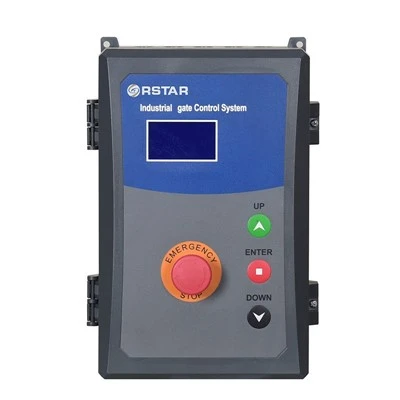
If you’re dealing with too much film waste, load damage, or downtime on your wrapping line, the odds are good that your control system is holding you back. We’ve helped dozens of operations, from small local distributors to large national logistics centers, upgrade their stretch wrapper control systems to meet their exact needs. To learn more about how a better control system can improve your wrapping process, connect with our team to discuss your specific goals and challenges.
HVLS Fan Motor References:
- Material Handling Industry Association. Stretch Wrapping System Best Practices. 2022.
- Packaging Digest. “Reducing Load Damage with Automated Wrapping Technology.” 2023.
- Smith, J. Lean Manufacturing for Packaging Operations. Industrial Press, 2021.
- Logistics Management. “Data-Driven Wrapping: The Role of Control Systems in Distribution Efficiency.” 2022.
Wuxi Rstar Electric Co., Ltd.
With abundant experience, we are one of the most professional stretch wrapper control system manufacturers and suppliers in China. Welcome to wholesale bulk customized stretch wrapper control system at competitive price from our factory. If you have any enquiry about quotation, please feel free to email us.
Address: 9th Floor, Building 9, Shengfeng Lianzhi Valley, No.67 Zhujiang Road, Xinwu District, Wuxi City
E-mail: rstarbz@163.com
WebSite: https://www.rstar-wx.com/
